Behavior deserves understanding before judgment.
A young person's behavior should not determine an adult's behavior. Meeting disrespect with disrespect may feel justified, but it teaches the very response we expect young people to outgrow. Adults have the responsibility to model what they are asking young people to learn.
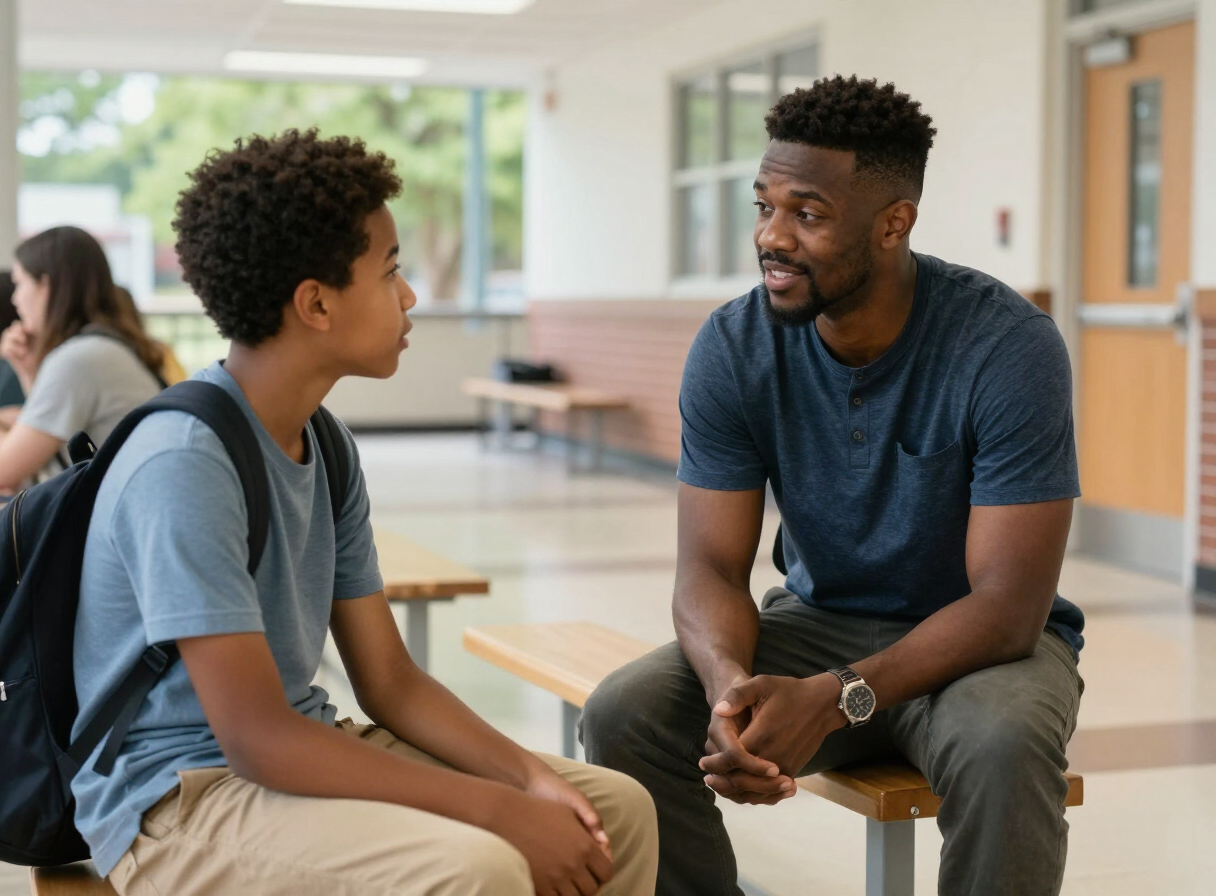
Behavior is often misunderstood
What adults see on the surface may not tell the whole story. A young person's behavior can be influenced by development, environment, relationships, emotional needs, stress, adversity, or learned ways of adapting.
Understanding those influences gives adults more information to work with — without removing accountability.
What This Can Look Like in the Moment
Instead of reacting immediately:
“I’m going to give you a moment, and then we can talk.”
Instead of matching their tone:
“I hear that you’re upset. I’m still listening.”
Instead of turning it into a power struggle:
“We can work through this, but we need to find a better way to communicate.”
Instead of taking the behavior personally:
“Something seems to be going on. Help me understand what happened.”
The Healed Perspective™
See the person beyond the adaptation.
The Healed Perspective™ is Traumana Group Services' signature lens for helping adults distinguish a young person's identity from behaviors that may have developed in response to stress, adversity, unmet needs, developmental experiences, environment, or survival.
Rather than automatically asking, “What's wrong with this behavior?” we encourage adults to also consider, “What might this behavior be communicating, protecting, or responding to?”
Behavior provides information, but it does not define the whole person.
Through The Healed Perspective™, adults learn to recognize the emotional needs and experiences that may be influencing behavior, respond without unnecessary labeling, maintain appropriate accountability, and create conditions that support healthier responses.
Understanding behavior does not mean excusing behavior.
It means addressing what happened without turning a young person's hardest moments, protective responses, or survival adaptations into their identity.
Because the goal is bigger than changing behavior.
It is helping young people recognize that who they had to become to get through something does not have to determine who they become next.
Three convictions that shape every engagement
They guide how we consult, train, coach, and build programs for the people who serve youth and emerging adults.
Behavior should not automatically define identity
A young person is more than their hardest moment. We help adults look past the behavior to the human it is trying to protect.
Understanding creates better responses
When adults grasp the emotional logic behind behavior, they respond with strategy and compassion instead of reaction.
Resilient young people are built through resilient relationships
Supportive environments and steady, trustworthy adults are the conditions in which resilience grows.
Strengths-based, trauma-informed, practical, and hopeful
Our approach is not about labeling people by trauma. It is about equipping the adults around young people with understanding they can use.
Strengths-Based
We start from what is working and what is possible, building on the capacities young people and the adults who serve them already have.
Trauma-Informed
We consider trauma as one possible influence on behavior — alongside development, environment, emotional needs, relationships, experiences, and stress — and design responses that create safety, trust, and dignity.
Practical
Every framework translates into concrete tools and responses adults can apply in classrooms, homes, clinics, and communities.
Hopeful
We emphasize resilience, emotional wellness, healthy development, and reconnection with identity — always oriented toward what people can become.
Our difference is in how we see behavior
These are the differentiators that shape how Traumana works with the adults who serve youth and emerging adults.
The Healed Perspective™
See the person beyond the adaptation.
The Healed Perspective™ helps adults distinguish who a young person is from behaviors and adaptations that may have developed in response to their experiences.
We Help Adults Translate Behavior
Young people do not always have the words to explain what they are feeling, needing, protecting, or responding to. Traumana helps adults look beyond the behavior itself and consider the emotional, developmental, environmental, and adaptive information it may be communicating.
We do not assume we know what a behavior means. We help adults ask better questions, recognize patterns, and respond with greater understanding, appropriate accountability, and practical support.
We See From the Young Person's Perspective
Traumana's perspective is shaped by a founder who was once the child adults were trying to understand and is now the adult able to put language to that experience.
That perspective helps us consider what a young person may be experiencing beneath the behavior — not simply how the behavior appears to the adults around them. We help adults slow down, ask better questions, and consider the emotional and developmental context that a young person may not yet have the words to explain.
“Our founder was once the child adults were trying to understand. Today, she helps adults understand the child.”
Understanding + Accountability
Understanding behavior does not require excusing it. Traumana helps adults consider what may be driving a behavior while maintaining appropriate expectations, boundaries, and accountability.
Practical Application
Understanding is most useful when adults know what to do with it. Traumana translates trauma-informed and developmentally responsive concepts into practical approaches adults can use in the environments where young people live, learn, grow, and receive support.
What informs our work
These are the foundations that inform Traumana's work — not the only things that make us different.
Built on Lived Experience
Real understanding of adversity and healing informs work that meets people where they are with empathy, dignity, and perspective.
Evidence-Informed Research
Our work is informed by relevant research and established knowledge related to trauma, development, resilience, and emotional well-being.
Professional Training
Professional training and continued learning strengthen the facilitation, consulting, coaching, and program-development work Traumana provides.
Help the adults in your world respond with understanding
Whether you lead an organization or support a young person at home, we can help you see the emotional logic behind behavior.